Evaluating the Special Food Burger Social Media Post Template for Digital Marketing
In the competitive landscape of digital food marketing, visual consistency and speed of deployment are critical factors for success. The Special Food Burger Social Media Post template represents a specific category of design asset tailored for restaurants, food bloggers, and culinary brands. This resource is an Adobe Illustrator (AI) file designed to streamline the creation of high-quality social media content. By examining its technical specifications, customization capabilities, and strategic applications, businesses can determine if this tool aligns with their current marketing objectives and operational workflows.
Understanding the Asset Structure
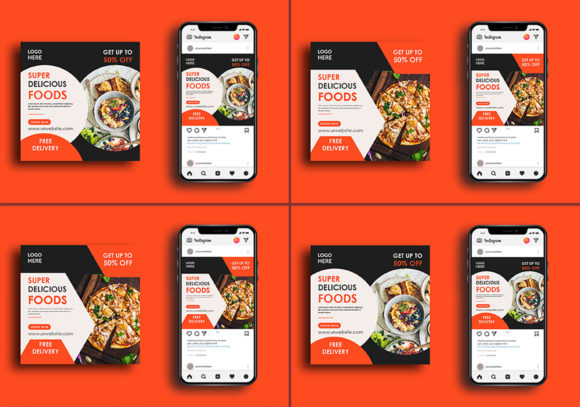
The core of this offering is a professionally designed banner optimized for square-format social platforms, specifically sized at 1080x1080 pixels. This dimension is the industry standard for Instagram feeds, Facebook posts, and LinkedIn updates, ensuring that images display without cropping or resolution loss on mobile devices. The file is delivered in the Adobe Illustrator format, which utilizes vector graphics. Unlike raster-based formats such as JPEG or PNG, vector files allow for infinite scalability without pixelation. This is particularly advantageous when adapting designs for different screen densities or repurposing elements for larger print materials like menus or flyers.
It is important to note that the download package contains only the editable design file. As stated in the product details, photos used in preview images are not included. This separation allows the user to maintain full copyright control over the imagery used in their final campaigns. The template relies on an RGB color mode, which is the correct color space for digital screens, ensuring that the vibrant colors of food photography are rendered accurately on smartphones and monitors.
Key Benefits for Food Industry Marketers
For professionals evaluating this template, the primary value proposition lies in efficiency and professional polish. Creating a social media post from scratch requires significant time investment in layout composition, typography selection, and color theory application. The Special Food Burger Social Media Post template eliminates these preliminary steps, providing a pre-structured canvas where the heavy lifting of design has already been completed.
- Rapid Deployment: In the food industry, trends move quickly. A new menu item or a limited-time offer often needs to be announced within hours. An editable AI file allows marketers to swap text and images in minutes, facilitating immediate publication.
- Customization Flexibility: Because all text is editable via the text tool, users can adjust headlines, pricing, call-to-action buttons, and descriptive copy to match specific campaign goals. This flexibility ensures that the message remains relevant regardless of the promotion.
- Visual Consistency: Brands thrive on recognition. Using a standardized template helps maintain a cohesive look across a social media feed, reinforcing brand identity. The clean, eye-catching design mentioned in the feature list serves as a neutral yet professional backdrop that highlights the food photography rather than competing with it.
Technical Considerations and Requirements
Before selecting this template, potential users must evaluate their technical infrastructure. The requirement for Adobe Illustrator implies a need for specific software proficiency. Unlike drag-and-drop online builders, working with an AI file necessitates familiarity with layers, vector paths, and type management. For teams lacking in-house design expertise, there may be a learning curve or a need to outsource the editing process to a freelance designer.
Furthermore, the exclusion of stock photography means the quality of the final output is entirely dependent on the user's ability to source or capture high-resolution images. A well-designed template cannot compensate for poor lighting or low-resolution food photography. Users should ensure they have access to a library of professional-grade images that fit the aesthetic of the template. The RGB color specification also dictates that this asset is strictly for digital use; attempting to print this file for physical signage without converting color profiles and checking resolution could result in color shifts.
Strategic Fit: When to Use This Template
This design asset is a strong fit for several specific scenarios. It is ideal for burger joints, fast-casual dining establishments, and gourmet food trucks that rely heavily on visual appetite appeal to drive foot traffic. It is also highly suitable for food influencers who need to maintain a polished grid on Instagram while managing a high volume of content. The "clean and eye-catchy" nature of the design makes it versatile enough for various types of announcements, including daily specials, happy hour promotions, new location openings, or customer testimonials.
Additionally, marketing agencies managing multiple restaurant clients will find value in the editability of the file. The ability to quickly duplicate the file, change the color scheme to match a client's branding, and insert new photos allows for scalable content production. The 1080x1080 size ensures compatibility across the major social ecosystems, reducing the need to create multiple versions of the same ad for different platforms.
Evaluating Alternatives and Tradeoffs
While the Special Food Burger Social Media Post offers significant advantages, it is not the only solution available. Users should consider alternatives if their needs diverge from the template's constraints. For instance, businesses that require vertical video content for TikTok or Instagram Reels will find this square static template insufficient. In such cases, motion graphic templates or video editing assets would be more appropriate.
Moreover, organizations without access to Adobe Creative Cloud might find web-based design tools like Canva or Figma more practical. These platforms offer cloud-based collaboration and simpler interfaces, though they may lack the precise vector control and print-ready potential of an Illustrator file. If a brand requires complex 3D rendering or photorealistic mockups that go beyond standard photo placement, a custom design commission might yield better results than a pre-made template.
There is also the tradeoff of uniqueness. Because templates are sold to multiple users, there is a possibility that another business could utilize a similar layout. To mitigate this, users should leverage the customization features aggressively—altering color palettes, swapping fonts, and rearranging layout elements to create a distinct variation that feels proprietary to their brand.
Decision-Making Insights
Ultimately, the decision to adopt this template should be based on a balance between resource availability and marketing goals. If the priority is speed, professional aesthetics, and cost-effectiveness, and the team possesses the necessary software skills, this AI file is a logical choice. It bridges the gap between amateur DIY designs and expensive agency retainers.
However, if the marketing strategy relies heavily on video, augmented reality, or highly experimental layouts, this static image template may serve only as a supplementary asset rather than a primary tool. Buyers should also verify that their image library is robust enough to populate the template effectively. The template provides the frame, but the user must provide the focal point.
In conclusion, the Special Food Burger Social Media Post template is a practical, high-utility resource for food-focused digital marketing. Its vector-based architecture, combined with full text editability and standard social dimensions, makes it a reliable foundation for consistent brand communication. By understanding both its capabilities and its limitations regarding software requirements and image sourcing, businesses can integrate this tool effectively into their broader content strategy.